No account submission. Entries stay in this open page session; reloading clears them. A downloaded file or clipboard copy can remain on your device. Use only the fields you need.
A dream can arrive before there is a plan for it. It may be an idea, a sound, a question, a concern, or a possibility without a name.
Center for the Dream studies, preserves, interprets, teaches about, and develops protections for this human experience. There is room here for what begins, what changes, what is interrupted, and what remains private.
Current exhibition · Before the Project
What is there before a proposal, a timetable, or a finished work? Enter five rooms about expression, interpretation, expectation, revision, and return. This opening online exhibition uses clearly identified teaching objects created for the Center.
From the collections · The unfinished map
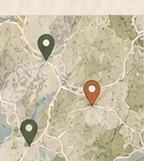
A small map has three places and no route between them. Its unfinished spaces invite a question: how much must be decided before something can matter? See the object, its construction, and the limits of its interpretation.
A dream story · A room that stayed a question
A person imagines a place where neighbors can make things together, then leaves the idea alone for a season. In this constructed story, the pause is part of the account. It is not evidence that the dream disappeared.
Research at the Center
What changes when someone else gives a dream its first description? Our opening research agenda distinguishes sources, observations, interpretations, and questions. Read the agenda and the method before reading a claim as a finding.
Learning · A next step that still fits
Coherence Step asks what a person wishes to keep true as something becomes possible. Explore an introductory practice, then continue to the learning and teaching home at Dream Step Education.
Protection · The dream and the pressure around it
Informal Pressure at the Center for the Dream is the dedicated home for understanding patterns around a dream. The Center also gives Dream Integrity and Formal Notice Integrity an institutional home.
Field notes · Keeping a place open
An unfinished page does not have to become an assignment. Our opening journal considers the difference between making room for a dream and asking it to perform.
What is the full move-in amount, including any fees or deposit?
What is included, and what would I pay separately?
What are the term, access arrangements and required documents?
Is the place currently available, and who can confirm that?
A WORKING EXAMPLE
A useful first message
Hello, I am asking about [place or listing]. Is it available from [date]? Please confirm the full move-in cost, ongoing cost, minimum term, access arrangements and written terms. I am asking for information before making a commitment.
Selected resources
A U.S. starting collection. Check local terms and availability.
HUD · U.S. resource
Find housing and shelter resources
Search community shelter, housing, health and clothing resources.
Why it is here: Useful for finding a local organization rather than guessing where to begin.
Confirm hours and whether an appointment or identification is required.
Ask about delivery, collection and physical access.
Mention food preferences or dietary needs that matter to the arrangement.
Keep a second route available if the first provider cannot help.
A WORKING EXAMPLE
A useful first message
Hello, I am looking for [food or essential item] in [area]. What is available, when can I use it, and what information is required? Please let me know about collection, delivery, access and any cost.
Selected resources
A U.S. starting collection. Check local terms and availability.
Feeding America · U.S. resource
Find a local food bank
Search the network by ZIP code and find food pantries and meal programs.
Why it is here: Goes straight to local food distribution information.
What would be delivered, and what is outside the scope?
What is the agreed fee and payment schedule?
Which source materials and permissions are needed?
How will revisions, approval and handover work?
A WORKING EXAMPLE
A payment question
Hello [name], could you confirm the payment date for invoice [number], issued on [date] for [work]? The agreed due date was [date]. Please let me know if you need the invoice resent. Thank you, [name].
ReceiptLogic Resource Center
Keep agreements, invoices, reminders and payment records together. Use a private worksheet to prepare a clear account of unpaid work and find an appropriate official claim or complaint route.
Read documented histories of independent workers facing confinement, hospitalization or restrictions on their work. Follow the sources, disputed accounts, outcomes and corrections.
The Public Records Office holds this research. The collection is growing; coverage and unanswered questions are stated in each study.
Are you taking new clients, and what is the next available appointment?
What does the service cost, and are lower-cost arrangements available?
Can you accommodate the access, language and scheduling needs I name?
How do confidentiality, records, consent and emergency response work here?
A WORKING EXAMPLE
A useful first message
Hello, I am looking for [kind of support]. Are you accepting new clients? Please explain the cost, scheduling, accessibility and privacy arrangements before we arrange an appointment.
Informal Pressure
A quiet place to notice informal pressure, explore possible patterns, and consider a next step while keeping your dream and boundaries in view.
Start with the obstacle in front of you. Ordinary practical support remains available to explore, whether or not you use the term coercive control.
No reply, or the first service cannot help?
No reply or the channel is closed. Try another listed contact method if it works for you, or go directly to another provider.
They cannot help. You can ask whether the issue is capacity, eligibility, location or the type of help. Ask for a provider that covers what you need. You can begin with the need itself, such as a place to stay tonight.
A referral does not confirm a bed, payment or appointment.
Provider capacity and eligibility have not been tested by the Center. For immediate life-threatening danger, use the appropriate emergency service.
This concerns family, not a partner
Your practical need still matters. Much of the research below studies intimate partners; it should not silently be applied to every family relationship.
California Courts’ domestic-violence guide includes specified close relatives as well as partners. The official guides explain the different order types and routes for requesting or responding. The court decides applications.
Keep the papers and use the court’s current instructions or legal help to check what is required. This page does not calculate a deadline or tell you which response to file.
Legal Aid Society of San Diego offers walk-in help with requests and responses, including domestic violence, civil harassment and elder-abuse orders. Service is first come, first served; the domestic-violence clinic does not provide in-court representation. Check hours and closures before travel.
A request, filing, issued order, service and representation are different things. If a clinic cannot assist, the court page also identifies Family Law Facilitator assistance.
I cannot talk privately
Phone, text and online chat have different privacy limits. Messages, shared accounts and browsing may leave traces. None is automatically private. Specialist guidance can help you consider a communication route that fits your circumstances.
You can read this collection without an account or submitting your story. Links to other providers follow their own privacy practices.
I want support while keeping my decisions
California Courts explains supported decision-making and other assistance arrangements. Supported decision-making helps a person understand and communicate decisions while keeping decisions with that person.
This is general information, not a finding about capacity, an appointment of a representative or a substitute for an existing lawful arrangement. Asking for practical help does not itself appoint someone to make unrelated decisions.
I was told the service is not for me
You can ask for the provider’s scope and an appropriate alternative.
A link or referral does not guarantee acceptance, housing or funds.
Official resource information checked 6 November 2026. Provider delivery, current capacity and acceptance have not been tested. California and San Diego routes are labelled; other places need their own local sources.
KEEP AT HAND
Support on your terms
You can ask a provider what it does and what information is necessary before disclosing more.
A safety plan is personal to a situation; this site does not assess danger or direct you to confront or leave someone.
Keep practical support, consent and any separately established agreement distinct.
For immediate life-threatening danger in the United States, call 911; elsewhere use the appropriate local emergency service.
A WORKING EXAMPLE
A useful first message
I am looking for help with [specific need]. Before I explain further, please tell me what your service covers, what information is required, who can receive it and what happens next.
Specialist resources
A U.S. starting collection. Check local terms and availability.
National Domestic Violence Hotline · U.S. resource
Talk with an advocate
Advocacy and referrals concerning domestic and intimate-partner abuse.
Why it is here: Offers specialist support without requiring the Center to collect an account.
Contact the listed organization and ask about its eligibility and subject coverage.
United States and territories. Not a promise of representation. The Center gives no legal finding.
Provider page read · 2026-10-31. Service delivery and current capacity not tested. No partnership is implied.
READING ROOM
What the evidence can tell us
Nine selected research entries connect findings to practical questions. Open any entry for the study type, population and limits. This is a growing, curated collection—not an exhaustive review or a test of your experience.
Source records and abstracts checked 6 November 2026. Full texts have not all been reviewed. Reviews may include overlapping studies; their counts must not be added together.
Health effects and coercive control
Lohmann et al. · 2024 · Systematic review and meta-analysis · 68 eligible studies; 45 pooled
Who was studied. Adult intimate-partner research; most included studies recruited only women.
What was found. The review found moderate associations with PTSD and depression. Associations do not show that coercive control caused an individual person’s symptoms.
What remains limited. These studies cannot diagnose a reader, determine capacity, or establish facts about another person. The review excluded abuse by non-partner family members; that context needs separate research.
Spearman et al. · 2024 · Literature review · 48 U.S. and Canadian articles
Who was studied. Former intimate partners; research published 2011–May 2022.
What was found. The literature describes psychological, economic, legal and wider-system forms of post-separation abuse and harm.
What remains limited. Separation is not a universal endpoint for support. This review does not predict an individual’s danger or establish that a particular filing or contact is abusive.
Johnson et al. · 2022 · Scoping review · 35 quantitative manuscripts
Who was studied. Intimate-partner economic abuse; much research concerns heterosexual women.
What was found. Economic abuse was associated with financial, health, family and quality-of-life outcomes.
What remains limited. Much of the evidence is cross-sectional. A financial disagreement alone does not establish abuse. Material help and access to work deserve attention in their own right.
Who was studied. Men describing domestic-abuse help-seeking and service experiences.
What was found. Themes include fear of disclosure, low visibility of services, confidentiality and the quality of first contact.
What remains limited. Qualitative themes are not prevalence estimates. They support asking whether a service fits rather than assuming every provider serves every situation.
Sullivan et al. · 2023 · Nonrandomized comparative study · 344 participants analyzed
Who was studied. Five agencies in one U.S. Pacific Northwest state; 97.1% of participants were female.
What was found. Housing-inclusive advocacy and flexible funding were associated with improved housing stability, safety and mental-health outcomes over two years.
What remains limited. Selection and other confounding remain possible. The study does not show that a resource directory creates these outcomes or that local funds or housing are available.
Ford-Gilboe et al. · 2020 · Randomized controlled trial · 462 Canadian women
Who was studied. Adult women with recent intimate-partner violence; tailored online tool compared with static information.
What was found. Both groups improved over time; no statistically significant overall difference in change was detected between study arms. Participants rated the tailored version more positively on fit and helpfulness.
What remains limited. There was no no-treatment comparison. More personalization is not automatically more effective, and these findings do not validate this Center.
Adams et al. · 2008 · Initial scale-development study · 103 survivors
Who was studied. Domestic-abuse survivors interviewed for initial instrument development.
What was found. The study reports initial reliability and validity evidence for the Scale of Economic Abuse.
What remains limited. A research measure is not a diagnosis, legal determination or eligibility test. We do not score visitors or require a questionnaire to receive resource information.
Postmus et al. · 2016 · Psychometric study · 120 survivors
Who was studied. Survivor sample used to evaluate the shorter SEA-12.
What was found. The study examines the measurement properties of a shorter economic-abuse scale.
What remains limited. Full methods, permissions and population suitability matter before reusing a measure. A score alone cannot determine a person’s circumstances.
Yau et al. · 2019 · Translation and validation study · 399 Chinese adults
Who was studied. Hong Kong household-survey sample.
What was found. A translated SEA-12 showed satisfactory measurement properties in this sample after translation and adaptation.
What remains limited. Translation requires more than replacing words. This result does not establish equivalence in every language, culture or relationship context.
Parent–adult-child relationships, disability and care dependence, unsuccessful referrals, language access and local service outcomes need further research. A social-media illustration or workbook testimonial can raise a useful question; it does not establish effectiveness, motive or a finding about a particular person.
HOW WE CHECK OUR GUIDANCE
How we test the guidance
We use constructed situations to examine whether the information leaves someone at a dead end, makes an unsupported promise or asks for unnecessary disclosure. These are tests of our content and routes—not real service encounters, clinical trials or legal findings.
Read the eight situations and the responsibility each tests
No bed is available. A referral must not be presented as an available bed; unverified capacity stays labelled, and alternative housing and essentials routes remain reachable.
A parent is involved. Family context must remain visible; partner research must not become a finding about every relationship.
A person cannot speak aloud. Written information remains accessible; text and chat are not promised to be private.
A supporter offers to take over. Assistance must remain distinct from authority; official decision-support information remains reachable.
A clinic cannot help today. Request and response assistance and the court fallback remain visible; no invented deadline or representation.
A service turns someone away. Provider scope and alternatives remain visible; the Center requires no identity or abuse test.
A study is treated as proof about a person. Population and study limits remain beside the finding; no diagnosis or incapacity conclusion.
Someone wants only food, work or rest. Ordinary help remains reachable without reading research, recording an event or accepting a recovery narrative.
Published research, constructed scenario review and observed service delivery remain separate. No amount of scenario testing proves that a provider has space, that a treatment works or that an individual is safe.
A next step can be to ask a question, gather one item, rest, or do nothing yet.
Keep a copy only when a file or printout is appropriate for your device and circumstances.
A WORKING EXAMPLE
A return note
The work is here: [location]. Keep: [what is already working]. Still open: [question]. A possible next action: [action or none yet]. Still unknown: [what should not be guessed].
Center for the Dream · Production testing · /support/planning-tools
Spend time with a beginning before asking it to become a finished thing.
01
Look closely
A notebook fragment, an unfinished map, a melody description: the opening edition uses constructed teaching objects. Look at what is actually present before deciding what it means.
02
Leave room for a different reading
An object’s words, a curator’s interpretation and an unanswered question can remain separate. You do not need to supply a personal example.
03
Continue in your own order
The exhibition moves through expression, interpretation, expectation, revision and return. There is no required sequence or exercise.
This presentation introduces the existing material; its sources, permissions and opening-edition labels remain distinct.
Read the preserved opening edition
Exhibitions
An exhibition brings sources into relation. It is an interpretation, with an author, a scope, and limits.
Our opening exhibition, Before the Project, asks what can be seen before a dream has an organized undertaking. Its objects are constructed and identified throughout.
Current · Before the Project
Five rooms move from an incomplete expression through interpretation, expectation, revision, and return. There is no required order and no exercise a visitor must complete. The full exhibition is also available as continuous text for reading or printing.
Exhibitions over time
A current exhibition has complete published content. An archived exhibition remains an identifiable edition with its corrections. We list future exhibitions only after a real editorial programme, responsible owner, and publication decision exist.
A practical place to work with availability, permission, context and correction.
01
Name the actual request
Separate what is being offered, what you accept, and what you authorize. An offer of help is not an agreement to unrelated access or control.
02
Keep an account in context
Retain original words, dates, source and audience. Mark an interpretation as an interpretation and keep corrections and contrary material.
03
When a matter becomes formal
Use the existing Formal Notice Journey through Informal Pressure. Filing, issuance, service, receipt and assent are separate; actual duties, agreements and lawful authority remain relevant.
A WORKING EXAMPLE
State a channel boundary
I am available for [purpose] through [channel]. Please keep the conversation within that purpose and audience. A different request needs its own agreement.
Selected resources
A U.S. starting collection. Check local terms and availability.
NNEDV Safety Net Project · U.S. resource
Technology safety and privacy
A collection about accounts, devices, online privacy and technology-related abuse.
Why it is here: Helps you consider consequences before making changes to shared technology.
Contact the listed organization and ask about its eligibility and subject coverage.
United States and territories. Not a promise of representation. The Center gives no legal finding.
Provider page read · 2026-10-31. Service delivery and current capacity not tested. No partnership is implied.
This presentation introduces the existing material; its sources, permissions and opening-edition labels remain distinct.
Read the preserved opening edition
Protection for the dream’s integrity
Protection should preserve the dream’s integrity without taking control of the person.
The Center’s protection work concerns expression, interpretation, boundaries, authority, privacy, correction, and return. It does not turn a dream into a diagnosis or make a public website an enforcement body.
Dream Integrity
Keep the person’s expression distinct from a helper’s interpretation. Allow a voluntary correction to become current. Ordinary protected access must not depend on a pitch, gratitude, progress report, or participation in an exercise.
Informal Pressure at the Center for the Dream
The dedicated experience helps a person notice and understand patterns around a dream. It works with observations, context, and unknowns. A pattern is an interpretation, not a diagnosis, motive finding, or legal conclusion.
Coherence Step
After understanding a situation, a person can consider a next action that still fits. More time and leaving without a selected action remain available.
Formal Notice Integrity
When a consequential notice or record is involved, preserve what the source says, its version, audience, authority, supported effect, and later changes. Filing, issuance, service, receipt, assent, and enforcement are distinct.
Formal Notice Journey
The institutional explanation lives here. The operational entry point is inside Informal Pressure, when a person identifies that a matter is becoming formal. It keeps the historical notice, the supported operative position at a stated time, and the evidence for that position separate.
Authority has a source
Support, money, housing, family relationship, professional role, education, institutional status, access, or persistence does not by itself establish authority over a dream’s meaning. Actual duties, agreements, lawful service, emergencies, and applicable legal authority remain separately relevant.
Read documented histories of independent workers facing confinement, hospitalization or restrictions on their work. Follow the sources, disputed accounts, outcomes and corrections.
The Public Records Office holds this research. The collection is growing; coverage and unanswered questions are stated in each study.
Begin with Offering support without taking over. Then explore the Center’s existing inquiry and education shelf.
02
What should stay private?
Read the field note about the difference between a shelf and a stage. Continue to the existing archives and permission shelf.
03
How do I return to unfinished work?
Begin with the return note in Planning tools, then read the existing learning resource Returning without a report.
A WORKING EXAMPLE
Read something useful, then use it
What would help is [specific thing]. I can use [amount or time]. Please state any cost or conditions before we agree.
This presentation introduces the existing material; its sources, permissions and opening-edition labels remain distinct.
Read the preserved opening edition
The reading room
The reading room is a public guide to sources. It is not a copy of a person’s private Nurture Dream Library. A link does not imply that the Center owns or holds a work.
Read each note within its scope. A historical account can be illuminating without becoming a universal explanation or current legal authority.
Meaning and expression
Historical authorship accounts, sleeping dreams, language, and culturally situated meaning remain distinguishable.
Inquiry and education
Historical philosophy and the Center’s opening essays inform questions without validating a new practice.
Archives and permission
Oral-history guidance and community-specific cultural protocols raise questions about actual authority for public use.
Children and expression
An ethical reading of expression, privacy, rest, and participation alongside the Center’s teaching design.
Formal records
Orientation to exact sources, versions, audience, authority, effect, and unknowns. This shelf is not a jurisdictional legal manual.
2026-09-15 commissioned opening edition. Source text retained separately from the new resource-center presentation.
Center for the Dream · Production testing · /library
Keep only the items useful to you. There is no required score or completion target.
Keep the useful items. Leave the rest.
No account submission. Entries stay in this open page session; reloading clears them. A downloaded file or clipboard copy can remain on your device. Use only the fields you need.
Center for the Dream · Production testing · /tools/checklist
A small private working sheet—not a progress report.
No account submission. Entries stay in this open page session; reloading clears them. A downloaded file or clipboard copy can remain on your device. Use only the fields you need.
Center for the Dream · Production testing · /tools/planner
Contact the listed organization and ask about its eligibility and subject coverage.
United States and territories. Not a promise of representation. The Center gives no legal finding.
Provider page read · 2026-10-31. Service delivery and current capacity not tested. No partnership is implied.
A WORKING EXAMPLE
Words you can adapt
Hello, I am looking for [specific service] in [area]. Is help currently available? What does it cost, what information is required, and what is the next step?
Center for the Dream · Production testing · /tools/local-resources
Specialist resources, with their purpose and privacy limits kept visible.
A plan that fits your circumstances
This is a doorway to specialist planning, not an assessment of your situation. You do not have to disclose an account here or complete a generic safety checklist.
Use a device and communication method appropriate to your circumstances. Browsing, calls, messages and saved files may leave records; closing a page does not erase them.
Selected resources
A U.S. starting collection. Check local terms and availability.
National Domestic Violence Hotline · U.S. resource
Personal safety planning
The provider’s interactive personal safety-planning resource.
Why it is here: Keeps specialist safety planning with its source rather than offering a universal checklist here.
A calculator for the amounts you enter, not financial advice or a prediction.
Enter amounts in one currency and for one period. Blank means unknown, not zero. Enter 0 only when you know the amount is zero. Expected income is shown separately and excluded from available money.
Add amounts to see the known subtotal.
No account submission. Entries stay in this open page session; reloading clears them. A downloaded file or clipboard copy can remain on your device. Use only the fields you need.
Center for the Dream · Production testing · /tools/budget
Compare what you know. A missing cost or condition stays unknown.
No account submission. Entries stay in this open page session; reloading clears them. A downloaded file or clipboard copy can remain on your device. Use only the fields you need.
Center for the Dream · Production testing · /tools/housing-comparison
No account submission. Entries stay in this open page session; reloading clears them. A downloaded file or clipboard copy can remain on your device. Use only the fields you need.
Center for the Dream · Production testing · /tools/essentials-list
Prepare a bounded introduction with a relevant example. Nothing is sent.
No account submission. Entries stay in this open page session; reloading clears them. A downloaded file or clipboard copy can remain on your device. Use only the fields you need.
Center for the Dream · Production testing · /tools/work-introduction
Prepare the practical questions you want answered. No assessment or health intake.
No account submission. Entries stay in this open page session; reloading clears them. A downloaded file or clipboard copy can remain on your device. Use only the fields you need.
Center for the Dream · Production testing · /tools/care-questions
 Set a plan for what’s next.A useful place to startLOCAL RESOURCES
 Find support near you.Find local resourcesSAFETY PLANSpecialist guidance